Views: 4 Author: Site Editor Publish Time: 2026-03-12 Origin: Site


Hand washing a car can take up to an hour. An automatic car wash takes less than ten minutes. For car owners and business operators alike, that difference matters—and it's one of the reasons auto car washing has become the go-to solution for keeping vehicles clean at scale.
But not all auto car wash systems are created equal. From the products you use to the machine you invest in, every decision affects the quality of the clean, the safety of your vehicle's paint, and the long-term cost of operations. This guide breaks down everything you need to know—how auto car washing works, what products deliver the best results, and how to choose the right auto car wash machine for your needs.
Auto car washing refers to the process of cleaning a vehicle using automated equipment rather than manual labor. A machine handles the entire process—from pre-soaking and foam application to high-pressure rinsing and drying—with little to no human involvement required.
There are two main categories:
Fully automatic car wash systems: The machine does everything. The driver pulls in (or drives through), and the system takes care of the rest.
Self-service car wash systems: The driver controls the process using a wand or hand-held equipment, choosing from preset wash modes.
Modern auto car wash systems are designed to handle a wide range of vehicle types, wash volumes, and customer preferences—making them a strong option for gas stations, parking facilities, and standalone car wash businesses.
Before selecting any equipment or products, it helps to understand the types of systems available. Each has its own use case, advantages, and limitations.
Type | Description | Best For |
|---|---|---|
Touchless (Contactless) | Uses high-pressure water and chemical solutions only—no physical contact with the vehicle | Paint-sensitive vehicles, premium car owners |
Soft-touch | Uses foam brushes or cloth strips to scrub the vehicle | Standard cleaning with a thorough scrub |
Hybrid | Combines both touchless and soft-touch elements | High-volume sites needing versatility |
Self-service | Customer-operated with coin or card-activated equipment | Budget-conscious operators, manual control |
Tunnel wash | Conveyor-based system where the car moves through a series of wash stations | High-volume commercial operations |
For most new car wash businesses, contactless automatic systems strike the best balance between safety, throughput, and low maintenance.
The machine is only half the equation. The auto car wash products you use directly affect how clean the car gets, how protected the paint is, and how satisfied the customer feels walking away.
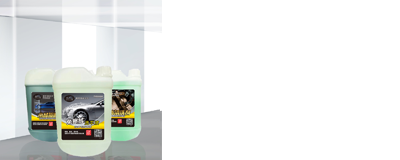
Here are the core product categories used in a standard auto car wash process:
Applied before high-pressure rinsing, pre-soak solutions loosen dirt, road grime, and bug residue. A good pre-soak makes the rest of the wash more effective—and reduces the pressure needed to clean the vehicle, which is gentler on the paint.
High-foam shampoos encapsulate dirt particles and lift them away from the surface. Look for pH-balanced formulas that clean without stripping wax or protective coatings already on the vehicle.
A spot-free rinse uses softened or deionized water in the final rinse stage to prevent water spots from forming as the vehicle dries. This step is especially important for dark-colored cars where water spots are most visible.
Finishing products like carnauba wax or ceramic coating sprays add a layer of protection to the vehicle's paint. They repel water, block UV rays, and give the car a glossy finish. Customers often pay a premium for this add-on service.
Brake dust and road grime accumulate heavily on wheels. Dedicated wheel cleaners are formulated to dissolve iron deposits and road residue without damaging alloy or chrome finishes.
Often overlooked, the undercarriage collects road salt, mud, and corrosive agents. A proper chassis flush extends the life of the vehicle's underbody—and is a compelling upsell at any car wash facility.

Selecting the right auto car wash machine is one of the most important decisions a car wash operator will make. The wrong choice leads to high maintenance costs, inconsistent results, and unsatisfied customers. The right one pays for itself over time.
Here's a comparison of key factors to consider:
Factor | What to Look For |
|---|---|
Wash capacity | How many cars per hour the machine can handle |
Water consumption | Lower is better—look for recycling and recirculation systems |
Energy efficiency | Variable frequency drives and energy-saving modes reduce operating costs |
Touchless vs. brush | Depends on your customer base and vehicle types |
Footprint | Ensure you have the physical space for the machine and vehicle clearance |
Smart features | Payment integration, license plate recognition, fault self-detection |
Component quality | Pumps, relays, and controllers from reputable global brands |
Warranty and support | Look for at least a one-year guarantee and accessible technical support |
For operators looking for a fully automatic, touchless solution, the OKO300B Contactless Double Pole Car Wash Machine from OKO is worth examining closely. Manufactured by Kaiping OKO Electronics Technology Co., Ltd., the OKO300B is built for commercial environments where throughput, consistency, and unmanned operation matter.
Key specifications at a glance:
Specification | Detail |
|---|---|
Model | OKO-300B |
Voltage / Power | 380V / 7.5KW |
Flushing pressure | 30–50 kg |
Water consumption | 90–200L per wash |
Installation dimensions | 6.3m × 3.2m × 3.2m |
Vehicle pass-through space | 8m × 6m × 3.3m |
Warranty | One year |
Water pump | PINEL (Germany) |
Relay & AC Contactor | Schneider (France) |
PLC Controller | OKO |
The OKO300B uses European-grade components throughout—from the German PINEL water pump to Schneider electrical parts from France. These aren't just marketing points. Reliability at the component level directly affects machine uptime, which is the single biggest driver of revenue at any car wash facility.
Standard wash modes include:
Standard Wash (4–6 minutes): Ideal for vehicles washed within the past week. Quick, efficient, and appropriate for routine maintenance.
Integration of Wash and Maintenance (6–8 minutes): Designed for vehicles with heavier sediment buildup. Includes cleaning and coating in one pass—the better choice for customers who care about paint protection.
The wash process itself covers nine stages:
High-pressure chassis cleaning to remove road salt and undercarriage grime
Energy-saving rotating spray of contactless car wash liquid
360-degree maintenance shampoo foam application
High-pressure contactless polishing using fan-shaped water
Bright color coating (applies a molecular polymer protective film)
Embedded quick-drying system with high-pressure airflow
Smart collision prevention for safe operation in all conditions
Automatic liquid proportioning system for accurate chemical mixing
Fully unmanned 24-hour operation via smart system control
The optional add-ons—including mobile air drying, bright color coating, smart payment via WeChat/Alipay, and license plate recognition payment—make it adaptable to both domestic and international markets.
Even the best auto car wash machine needs regular maintenance to perform consistently. Neglecting upkeep leads to breakdowns, inconsistent cleaning, and costly repairs.
Routine maintenance checklist:
Daily: Check water pressure levels, inspect nozzles for blockages, review chemical levels, run a test cycle
Weekly: Clean filters, inspect hoses and fittings for wear, check electrical connections
Monthly: Lubricate moving parts, inspect pumps for leaks, recalibrate chemical dosing systems
Annually: Full system inspection, replace worn seals and valves, update software if applicable
Machines with built-in fault self-check systems—like the OKO300B—can flag issues early, reducing the risk of unplanned downtime. That said, having a service agreement in place with the manufacturer or a certified technician is still the safest approach.
It can be—but only with the right setup. The car wash industry is largely recession-resistant. People wash their cars regardless of the broader economy, and touchless automatic systems have low labor requirements compared to traditional hand-washing businesses.
The key financial factors to evaluate before investing include:
Factor | Consideration |
|---|---|
Equipment cost | Varies widely—basic self-service units to advanced fully automatic systems |
Site requirements | Adequate space, three-phase electrical supply, water access, drainage |
Chemical costs | Ongoing operational cost—factor in volume discounts |
Throughput | Machines with faster cycle times generate more revenue per day |
Labor costs | Fully automatic unmanned systems minimize staffing needs |
Maintenance costs | Machines with quality components have lower long-term repair costs |
For new operators, starting with a contactless fully automatic system reduces labor complexity, lowers the risk of vehicle damage claims, and appeals to a broad customer base.
Auto car washing has come a long way from coin-operated brush tunnels. Today's best systems—built with precision components, smart control systems, and multi-stage wash programs—deliver results that rival hand detailing in a fraction of the time.
Whether you're setting up a new car wash business or upgrading existing equipment, the fundamentals remain the same: invest in quality auto car wash machines, use the right auto car wash products for each stage of the process, and maintain your equipment consistently.
Start by evaluating what your site requires in terms of space, throughput, and budget. From there, choosing the right machine becomes straightforward. If a fully automatic contactless system fits your needs, the OKO300B is a well-engineered option built for long-term commercial use—backed by European components and designed for 24-hour unmanned operation.


Add